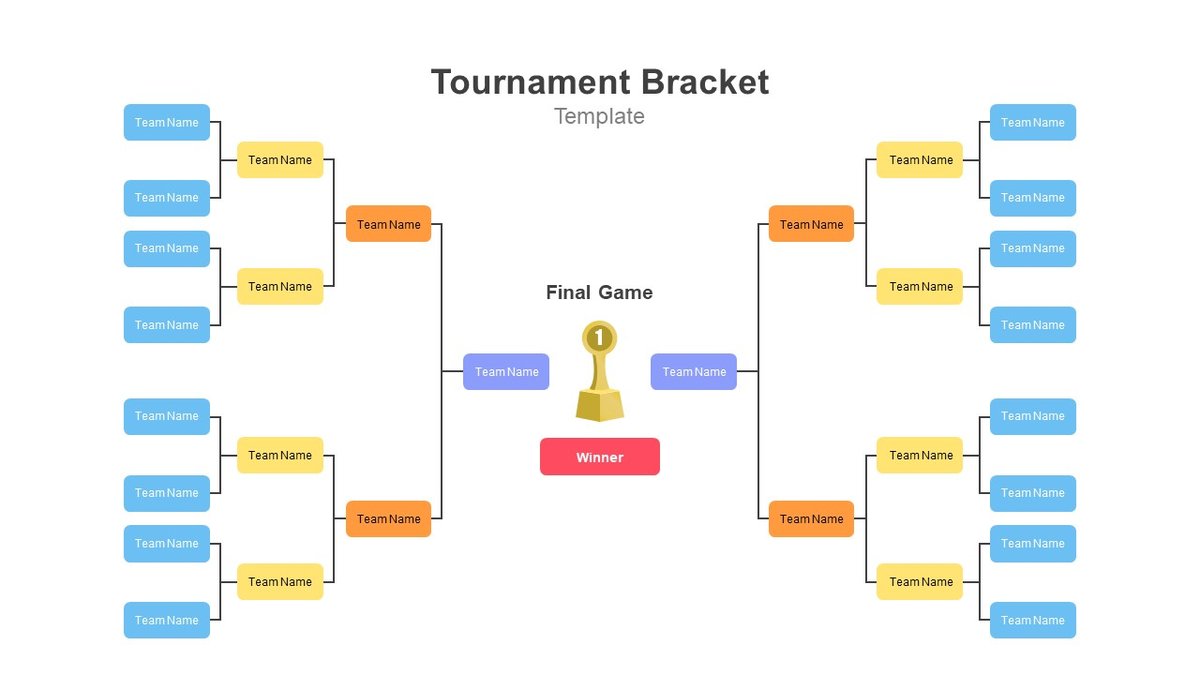
When the stakes are high, the competition fierce, and a champion must be crowned, what's the structure that organizes the chaos into a thrilling narrative? It's the tournament bracket. Understanding different bracket types and tournament formats isn't just for event organizers; it's key to appreciating the strategy, fairness, and sheer drama unfolding on the field, court, or screen. From your local youth soccer league to the most prestigious international championships, the chosen format shapes everything from participant experience to the ultimate legitimacy of the victor.
At its core, a tournament bracket is a roadmap for competition, designed to balance excitement, fairness, and practical constraints like time and available resources. It's a system that determines who plays whom, when, and under what conditions, all while striving for a clear, undisputed champion. But not all roads to victory are paved the same.
At a Glance: Your Takeaways on Tournament Formats
- Diverse Options: There's a bracket type for nearly every competitive goal, from rapid elimination to extensive play.
- Balancing Act: Formats balance efficiency (fewer games) with fairness (more chances to play).
- Player Experience Matters: Some formats prioritize participation and development, while others are purely about finding a singular champion.
- Strategic Design: Understanding seeding, byes, and tiebreakers is crucial for competitive integrity.
- No One-Size-Fits-All: The "best" format depends entirely on the event's specific goals, number of participants, and available time.
The Foundation: What Makes a Tournament Bracket Tick?
Every competitive structure, whether it's a bracket or a league, aims to achieve a delicate balance. On one hand, you want thrilling competition, clear winners, and an efficient path to the top. On the other, you need fairness, ample opportunity for participants, and a system that fits within real-world constraints like time, venue availability, and budget.
Tournament design considerations are surprisingly complex. You're thinking about how to schedule for player rest, how to ensure competitive balance so strong teams aren't knocked out by a fluke, and how to meet participation goals—whether that's maximizing playing time or simply crowning a champion as quickly as possible. Ultimately, the bracket you choose is a reflection of these priorities.
The Big Players: Common Tournament Formats Explained
Let's dive into the most prevalent tournament formats, exploring their mechanics, typical use cases, and the distinct advantages and disadvantages they bring to the competitive arena.
1. The High-Stakes Sprint: Single Elimination Tournament
Definition: The most straightforward and often most dramatic format, single elimination is exactly what it sounds like: one loss, and you're out. Teams or players advance with each win until only one undefeated champion remains.
Use Cases: This format shines when you have a large number of teams but a very limited timeframe. Think of many college sports championships (like March Madness) or fast-paced esports qualifiers where efficiency is paramount. It's less ideal for events where participants travel long distances, as a single, short match could mean their tournament experience is over quickly.
Pros:
- Easiest to Organize: Simple structure makes scheduling and tracking straightforward.
- Quick and Efficient: Requires the fewest games to determine a winner, saving time and resources.
- Builds Excitement: Every match is a high-stakes, do-or-die affair, leading to intense moments.
Cons: - Limited Playing Time: Many teams get only one game, which can be disappointing.
- Unforgiving: A single off-day, bad referee call, or unlucky draw can eliminate a strong contender prematurely.
- Doesn't Always Identify the "Best" Team: The champion is simply the team that didn't lose, not necessarily the one that would win a longer series.
2. The Second-Chance Scramble: Double Elimination Tournament
Definition: Offering a significant step up in fairness from single elimination, a team or player must lose twice to be eliminated. This format cleverly employs two parallel brackets: a "winner's bracket" for undefeated teams and a "loser's bracket" for those with one loss.
Championship Showdown: The winner of the loser's bracket earns the right to face the undefeated winner of the winner's bracket. Here's the twist: the loser's bracket champion must defeat the winner's bracket champion twice to claim the overall title, while the winner's bracket champion only needs to win once. This ensures the undefeated team maintains its advantage.
Pros:
- More Opportunities: Guarantees every participant at least two games, significantly improving the player experience.
- Reduces Impact of Bad Luck: A single poor performance doesn't end a team's run, allowing strong teams to recover.
- More Accurate Ranking: Often produces a more legitimate champion, as the winner has proven their mettle across multiple challenges.
Cons: - More Games, Longer Duration: Requires significantly more matches than single elimination, demanding more time and facility access.
- Complex to Manage: Tracking teams across two brackets can be more intricate, especially with large numbers.
- "If-Game" Scenarios: The championship round can sometimes require an extra game, impacting scheduling predictability.
3. The Even More Resilient Path: Triple Elimination Tournament
Definition: Taking the concept of second chances even further, a team or player is only eliminated after three losses.
Structure: A typical triple elimination setup would see a team losing in the winner's bracket move to "Loser's Bracket 1." Losing there sends them to "Loser's Bracket 2." Only a third loss results in complete elimination from the tournament.
Purpose: The primary goal here is to maximize matches for participants, providing extensive play and numerous opportunities for recovery.
Popularity: While it offers greater resilience, triple elimination isn't as widely adopted as single or double elimination due to the substantial increase in games and organizational complexity. It's often reserved for specific, smaller events where maximizing participant play is the absolute top priority.
4. The All-vs-All Marathon: Round Robin Tournament
Definition: In a pure round robin, every team plays every other team once. Rankings are determined by win-loss records, with the best records advancing to a final stage or being declared the winner.
Use Cases: Round robin formats are excellent for league play, group stages of major tournaments (like the FIFA World Cup or Olympic pool play), or events where player development and varied competition are emphasized. For very large numbers of participants, a full round robin is impractical; instead, teams are often broken into "pools," where groups play round robin, and pool winners advance to a knockout championship. For example, a standard 24-team round robin would involve 276 games. Breaking this into 6 pools of 4 teams would require only 36 group games, plus a championship bracket, making it much more manageable.
Pros:
- Fairer Competition: Guarantees all teams play against a wide variety of opponents, reducing the impact of a single bad matchup.
- Multiple Games for All: Every team gets extensive playing time, enhancing the participant experience.
- Reduces "Unlucky Draw" Risk: The final standings are a truer reflection of consistent performance, not just performance on one day.
- Ideal for Player Development: Teams gain experience against diverse play styles.
Cons: - Requires Significant Time: Playing every team can be extremely time-consuming and logistically challenging, especially with many participants.
- Scheduling Flexibility Demands: Needs more venues and careful scheduling.
- Can Be Less Exciting: If a clear dominant team emerges early, later games might lack the high stakes of elimination rounds.
5. The Participant-First Promise: 3 Game Guarantee Tournament
Definition: This format explicitly assures each team or player a minimum of three games. It typically starts with a structure similar to double elimination, featuring winner's and loser's brackets. The key difference lies in how teams losing their first two games are handled: instead of being eliminated, they play an additional game (often in a dedicated consolation bracket) to ensure they meet the three-game minimum.
Popular In: You'll frequently encounter the 3-Game Guarantee in sports like softball, baseball, and youth tournaments.
Purpose: This format is particularly popular for events where teams travel significant distances or pay substantial entry fees. It provides peace of mind, assuring participants that they will get enough playing time to justify their investment of time and money, regardless of their early performance.
6. The Second-Tier Challenge: Consolation Tournaments
Basic Idea: Consolation tournaments operate alongside the main championship bracket. Teams that win their first-round matches (or sometimes later rounds of the winner's bracket) continue competing for the overall championship. However, teams losing their first round are often moved into a separate "Consolation Bracket" to compete for a consolation championship. This doesn't crown the overall victor, but it offers another goal and more playing time for teams that didn't quite make it to the top tier.
Popular In: Wrestling tournaments frequently use consolation brackets to ensure wrestlers get more matches and to determine placers beyond just the champion.
7. The Skill-Matching Maze: Compass Draw Tournaments
Definition: A unique and highly engaging format, the Compass Draw features various brackets named after points on a compass (East, West, North, South, Northeast, Northwest, Southeast, Southwest).
Advancement Logic: The beauty of the Compass Draw lies in its dynamic advancement. Winners typically continue in their current bracket, moving towards the "East" (main winner's path). Losers, however, are strategically moved to a different compass bracket. For example, a first-round loser might move to the "West" bracket, a second-round loser to the "North," and so on.
Benefits: This structure is designed to automatically pair players with others of similar skill levels as the tournament progresses, ensuring competitive matches throughout. It also guarantees players many matches, often between 4-8 games depending on the draw size.
Used In: Widely embraced in individual sports like Tennis and Pickleball, the Compass Draw is adaptable for any sport where individual or doubles play thrives.
8. The Best of Both Worlds: Pool Play + Bracket Tournament
Definition: This hybrid format smartly combines elements of both round robin and knockout play. It begins with a "pool play" stage, where teams are divided into smaller groups (pools) and play a round robin against other teams within their pool. Once pool play concludes, the top teams from each pool (e.g., the top one or two teams) advance to a knockout-style bracket (either single or double elimination) to determine the overall champion.
Use Cases: This is a go-to format for large tournaments that want to give all teams multiple games while still having a thrilling, decisive elimination stage. Major international sporting events often use variations of this.
Pros:
- Ensures More Playing Time: All teams get guaranteed games in the pool stage, satisfying participants.
- Rewards Consistency: Strong teams are rewarded for consistent performance in pool play by advancing.
- Engaging Mix: Combines the structured fairness of round robin with the high-stakes excitement of a knockout bracket.
- Flexibility: Allows for adaptation based on the number of teams and time constraints.
Cons: - Complex Scheduling: Requires careful management of two distinct stages of play.
- Tiebreaker Disputes: Pool-stage results can lead to complex tiebreaker scenarios that need clear rules.
9. The Chess Master's Choice: Swiss System Tournament
Definition: A Swiss System tournament is a structured competition that avoids direct eliminations. Instead, teams or players are paired against opponents with similar win-loss records in each round. The goal is to ensure balanced matches throughout the tournament, with rankings determined purely by cumulative win-loss records (and often tiebreakers like point differential or strength of opponents).
Use Cases: Predominantly used in individual competitions like chess, magic tournaments, and many esports events, the Swiss System is also adaptable for youth team sports where the focus is on development and continuous challenge rather than rapid elimination.
Pros:
- Ensures Balanced Matches: You're always playing someone roughly at your skill level, leading to engaging contests.
- No Early Eliminations: Everyone plays every round until the tournament concludes, maximizing participation.
- Reduces Bad Luck Impact: A single poor matchup won't derail an entire tournament, as you'll be re-paired.
Cons: - Requires Careful Management: Needs a robust system (often software) to track standings and accurately pair opponents each round.
- Can Be Less Exciting: Lacks the dramatic, sudden-death nature of knockout formats.
- No Single "Champion" Match: The winner is often determined by standings, not a final head-to-head.
The Architects of Fairness: Seeding & Advancement Strategies
A tournament's integrity often hinges on how teams are initially placed and how ties or uneven numbers are handled.
Seeding: Laying the Groundwork
Seeding is the process of arranging participants in a bracket based on their perceived strength or past performance. Its primary goal is to ensure that the strongest teams don't meet too early in the competition, ideally setting up climactic final matches.
- Performance-Based Seeding: The most common method, using previous season standings, league performance, or rankings to determine seeds. Higher-ranked teams get lower seed numbers (e.g., #1 seed, #2 seed).
- Random Draw: Sometimes used for parity, especially in less formal or developmental tournaments. Every team has an equal chance of drawing any opponent.
- Power Ranking/Algorithm Seeding: More complex, often used in professional or larger amateur events. These involve sophisticated algorithms that take into account multiple factors like opponent strength, margin of victory, and recent performance.
Byes: A Privilege of Prowess
When the number of teams isn't a perfect power of two (e.g., 4, 8, 16, 32), byes are necessary. A bye allows a team to automatically advance to the next round without playing a match.
- Purpose: Byes create an even number of competitors in subsequent rounds, allowing the bracket to function smoothly.
- Allocation: Byes are almost always granted to the highest-seeded teams, recognizing their superior performance and rewarding them with a rest or an easier path to the later rounds. For instance, in a 13-team single-elimination bracket, three teams would receive first-round byes.
Tiebreakers: When Records Just Aren't Enough
In formats like round robin or pool play, teams often end up with identical win-loss records. Tiebreakers are predefined criteria used to determine which team advances or is ranked higher. Clarity on tiebreaker rules before the tournament starts is essential to avoid disputes.
- Head-to-Head Results: If only two teams are tied, the winner of their direct matchup usually advances.
- Point Differential: The difference between a team's total points scored and total points conceded (or goals for minus goals against). A higher differential indicates stronger overall performance.
- Strength of Schedule: A more complex tiebreaker that considers the cumulative win-loss record of the opponents a team has played. Beating stronger opponents boosts this metric.
- Goals/Points Scored: The total number of points or goals a team has accumulated throughout the tournament.
- Fewest Points/Goals Conceded: Conversely, the team that allowed the fewest points might get the nod.
- Coin Flip/Random Draw: As a last resort, if all other tiebreakers are exhausted.
Choosing Your Champion's Path: A Decision-Maker's Guide
So, you're organizing a tournament, and you're faced with a buffet of options. How do you pick the right one? The "best" format is always the one that most effectively meets your specific goals and constraints.
Here's a framework to guide your decision:
- What's Your Primary Goal?
- Crown a Champion Quickly/Efficiently: Go for Single Elimination.
- Fair Champion, Maximize Play: Consider Double Elimination or Pool Play + Bracket.
- Maximize Participation/Development: Look at Round Robin, 3 Game Guarantee, Compass Draw, or Swiss System.
- Give Everyone a "Second Chance" Title: Incorporate Consolation Brackets.
- How Many Participants Do You Have?
- Small (4-8 teams): Almost any format works, including full Round Robin for maximum play.
- Medium (8-32 teams): Single or Double Elimination are strong contenders. Pool Play + Bracket can also work.
- Large (32+ teams): Single Elimination or Pool Play + Bracket are often necessary due to the sheer number of games required.
- What Are Your Time & Resource Constraints?
- Limited Time/Venues: Single Elimination is your most efficient choice.
- Ample Time/Resources: You have the luxury to explore Double Elimination, Round Robin, or hybrid formats. Remember that more games mean more court time, referees, and volunteer hours.
- What's the Skill Level and Experience of Participants?
- Beginner/Youth: Formats that guarantee more games (Round Robin, 3 Game Guarantee, Swiss System, Compass Draw) are often preferred to emphasize development and fun over elimination.
- Experienced/Competitive: Single or Double Elimination bring high stakes and intense competition.
- What's the Nature of the Sport/Game?
- Individual Sports (Tennis, Chess): Compass Draw, Swiss System, or Single Elimination work well.
- Team Sports (Basketball, Soccer): Double Elimination, Pool Play + Bracket, or Single Elimination are common.
- Games with Varying Match Lengths: Account for this in scheduling, especially for longer formats.
Once you have a clear picture of these factors, you can weigh the pros and cons of each format against your specific scenario. Don't be afraid to mix and match elements to create a custom experience that perfectly suits your event. And when you're ready to put your chosen format into action, you'll find tools like bracket generators incredibly helpful. You can Try our free bracket generator to visualize and manage your tournament structure, making the organizational process much smoother.
Beyond the Standard Playbook: Hybrid and Adaptive Formats
The world of tournaments isn't strictly black and white. Many organizers creatively combine elements from different formats to create a truly bespoke experience.
- Group Stage to Double Elimination: Imagine a tournament starting with Round Robin pool play, but then the top two from each pool advance to a Double Elimination knockout bracket for the main championship, while the next best teams might go into a Consolation Bracket.
- Swiss System with a Top-Cut Bracket: Many esports events use a Swiss System for a few rounds to narrow down competitors, then transition to a Single or Double Elimination bracket for the top performers to crown a champion.
These hybrid approaches allow for incredible flexibility, letting organizers fine-tune the balance between guaranteed play, competitive fairness, and ultimate championship drama.
Tournament Trouble-Shooting: Common Pitfalls and Solutions
Even with the best intentions, tournament organization can hit snags. Anticipating these common pitfalls can save you a lot of headaches.
- Uneven Brackets: An odd number of teams can create byes, which need to be handled fairly (usually by giving them to top seeds). Always plan for the number of teams you realistically expect, and have contingency plans for slightly higher or lower numbers.
- Scheduling Nightmares: Factor in travel time between venues, necessary breaks for players, and realistic match durations. Overlapping games or tight turnarounds lead to player fatigue and delays.
- Competitive Imbalance: Poor seeding can lead to top teams meeting too early, or weaker teams getting crushed repeatedly. Invest time in accurate seeding methods.
- Lack of Clear Rules/Tiebreakers: Ambiguity breeds conflict. Ensure all rules, especially for tiebreakers and advancement, are communicated clearly to all participants well in advance.
- Disappointed Participants: If the format offers minimal play, set those expectations upfront. Or, choose formats that prioritize more game time, especially for youth or recreational events.
- Volunteer/Staff Burnout: Longer, more complex tournaments require more hands on deck. Ensure you have adequate staffing for scorekeeping, officiating, and general logistics.
Your Tournament FAQs Answered
You've got questions, we've got answers. Here are some common queries about tournament formats:
Q: What's the fairest tournament format?
A: "Fairness" can mean different things. For guaranteeing varied play and accurate ranking over many games, Round Robin is often considered the fairest. For providing second chances and reducing the impact of a single bad game, Double Elimination is highly fair. Single elimination is the least forgiving but arguably "fair" in its directness.
Q: How do you handle an odd number of teams in a single-elimination bracket?
A: You use "byes." The highest-seeded teams automatically advance to the second round without playing. For example, in a 7-team bracket, the #1 seed would get a bye and play the winner of the #4 vs #5 match in the second round.
Q: Can I combine different bracket types?
A: Absolutely! Many major tournaments use hybrid formats, such as "Pool Play + Bracket." This allows you to leverage the benefits of multiple structures, like guaranteeing initial games (pool play) while still having an exciting knockout stage.
Q: How many games does a double-elimination tournament have?
A: For 'N' teams, a double-elimination tournament will have between 2N-2 and 2N-1 games. The extra game (2N-1) is only played if the loser's bracket champion defeats the winner's bracket champion in their first championship match, forcing an "if-game."
Q: What's the best format for youth sports tournaments?
A: Formats that prioritize participation and development are generally best. 3 Game Guarantee, Round Robin (especially in pools), Pool Play + Bracket, or even the Swiss System are excellent choices as they ensure more playing time and reduce the sting of early elimination.
Ready to Build Your Perfect Tournament?
Navigating the world of tournament formats might seem daunting at first, but with a clear understanding of each type's strengths and weaknesses, you're now equipped to design an event that perfectly aligns with your goals. Whether you're aiming for a swift, high-stakes championship or a multi-day festival of competitive play and development, the right bracket can make all the difference.
By carefully considering your participants, your resources, and your ultimate objectives, you can craft a tournament experience that is not only fair and exciting but also memorable for everyone involved. So go forth, plan strategically, and may the best team (or player!) win!